
What Actually Happens When Personality Embraces a Soul Focus
For most of us, personality has been presented as something to fix: a string of preferences, characteristics, and psychological pathways to describe how we move through the world. The Jung, Myers-Briggs® Type Indicator became very popular upon it’s introduction in the 1040s. It wasn’t designed to be something we studied outside of ourselves, but through decades of manipulation and serving as a corporate tool to see if you were a right fit –UGH– it losts it’s origins. Which Jung, Myers-Briggs® offered as a language for understanding ourselves, and others, and respecting our differences so we all get along better. This system was introduced on the heels of WWII. It gave us sixteen archetypes, intelligent in their architecture, helpful in relationships, clarifying in career paths. For decades, this framework helped countless people make sense of themselves and their place within society. I did for me and the 1.5 – 3 million people who take this test annually.
Usefulness Is Not The Same as Wholeness.
Today, many women entering midlife are realizing that “success” can be a misnomer. It rarely takes into consideration the who of who you really are; instead, it focuses on productivity, what you can offer, and how much time you can dedicate to their business. I’m not saying this is inherently bad, but it becomes exponentially lopsided when you’re working within a corporation that doesn’t recognize you as more than a productive cog in its ever-turning revenue wheel. Where’s the humanity in that? Where’s the soul in that?
It took me a while to understand this, and it wasn’t through external learning it was through personal life experiences. It started with a midlife tsunami — a tidal wave of challenges that hit the shores of my life. From the outside, my life appeared storybook. I was seen as successful, capable, respected. But beneath the designer clothes was an emptiness that could no longer be silenced.
The Moment I Recognized….
I remember one particular meeting with great clarity. I was seated at a long conference table, listening as ideas were exchanged with energy and precision. We were discussing strategy, growth, and measurable outcomes. Familiar phrases circulated the room—“heads in beds,” “butts in seats” “visitors through the gates,” —all shorthand for ROI within the industry. My colleagues where excited and motivated, brainstorming ways to meet revenue goals.
But as I sat there, something in my body began to react in a way that felt impossible to ignore. My heart rate quickened, my stomach tightened, and I could feel the perspiration trickling down my back. I reached for my glass over water repeatedly, attempting to calm myself while somehow remaining smiling and engaged. No one seemed to notice. At the time, I didn’t either because I didn’t understand what was happening.
This wasn’t the first time, I had this type of reaction, which got me thinking, is this it. I felt very disconnected, not only from my work, but from the people in the room. I asked myself, when had I bought into a culture, that reduces human beings to pieces-parts and dollar signs. Where, in all of this, was the humanness? What about the mother delighting in a meaningful experience with her child? Cultural traditions that nourish a visitor’s spirit long after they returned home? Why did no one seem interested in the deeper questions — the ones about what’s really import? The invisible longings that sit quietly beneath every human itinerary?
I looked around the table and saw enthusiasm. I just felt sick to my stomach. Since, this had happened so many times before, my response had become robotic, as I told myself, Oh Nina you’re an idealist. It’s just you being overly sensitive. When it actually, what was happening here was far more sacred.
It would take years for me to understand that nothing was wrong with me I was just in the wrong place.
When My Personality Began To Take on a Soul Focus.
I began to wake up to the idea that my soul choose my personality, my life shifted dramatically. A tsunami hit and rearranged my life; or you could say it recalibrated it. Careers shifted. Relationships dissolved. Geography changed. Structures I had relied upon for identity were gone. What felt at the time like loss was, in truth, revelation. Because in the unraveling, I began to perceive something that would eventually become the foundation of Spiritual Personality Typing℠: the realization that personality is not merely psychological wiring — it is a sacred tool the soul uses to express itself.
The insight came slowly, almost imperceptibly at first. What if the soul, our higher conscious self, is tethered to Divine Intelligence. And what if it chooses the personality through which it will express itself in this lifetime? What if our traits are not just cognitive function, arranged in hierarchical patterns, but intentional and sacred; designed for soul expression and evolution? What if we are not personalities trying to become spiritual, but spiritual beings having a human experiences through personality?
This New Perspective Doesn’t Discard the Sixteen Types
The basis of Spiritual Personality Typing℠ holds true to the basis of Myers-Briggs® . What changes is the orientation. In the old-school paradigm, personality is interpreted primarily through logic, cognition, behavior, and external characteristics. It helps us function effectively within systems. In the paradigm I founded, personality takes on a sacred, self-identity. It’s no longer personality in a box but a flowing, constantly evolving sense of self. I abhors the ideas that personality types or stereotypical or are just for entertainment purposes. I see our traits as animations of our higher-conscious self.
When personality operates without a conscious connection to the soul, it’s easily co-opted by ego, external conditioning and cultural expectations. Traits become tools for approval, performance, comparison, or control. For example an analytical mind may over-intellectualize to avoid vulnerability. A relational heart may overextend to belong. A visionary temperament may chase perpetual novelty to escape stillness. In these distortions, we often attempt to fix ourselves, unaware that what needs healing is not the trait itself but its disconnection from source, and the
When Personality Takes On Soul Focus
When personality takes on a soul focus however, something profound begins to happen. The center of gravity shifts from external authority to self-authority. The measure of success is no longer solely achievement or corner-office success, but inner alignment. You begin to ask not, “How do I perform well in this environment?” but rather,
“How is my soul seeking to express itself through me in this now moment?”
The question is subtle, yet revolutionary.
The Soul Doesn’t Participate In Performance Culture
This is not an easy transition because the soul self is on the opposite spectrum of the ego. The soul does not participate in performance culture. It’s not in a hurry, it’s eternal! It doesn’t conform to timelines as deadlines are irrelevant. As your personality recognizes the soul, roles that once felt defining may slip away. Friendships recalibrate. Ambitions evolve or dissolve. The identity you worked so diligently to construct may begin to feel like a Halloween costume rather than a calling. There is often a season of uncertainty, because what often happens is what no longer fits falls away before what is emerging comes into clarity.
During my own tsunami, I was certain I was losing it. In hindsight, I see that I was only losing the borrowed pieces, parts; inherited beliefs, values and ideas, and false beliefs that no longer fit. What remained was quieter and far more powerful. A sacred self identity rooted not in performance but in presence, an awareness feeds my true self.
A Soul That Is Focused Reveals Pathways of Possibilities
Through Spiritual Personality Typing℠, I began to reinterpret the 16 types not as categories of capability but as pathways of evolution. Each type carries both distortion and design. Each has a way it contracts when disconnected from soul and it also expands when aligned. No type is superior; none is deficient. Each is an intentional expression, chosen as a means through which the soul relies on for growth, rich human experiences and transcendence.
To view personality as sacred is to relinquish the habit of self-critique and step into self-cooperation. You are not here to perfect your traits but to allow them to mature in service of your true self. You are not confined to a psychological box; you are a limitless being expressing through a particular configuration for a particular purpose. The Divine spark, the fractal of Divinity within you animates that soul which is the bridge between Divinity and personality. It’s a beautiful and sacred configuration built from the the inside out. When your begin to understand these inner workings the true self comes into full alignment with life.
I’ve reinterpret the sixteen types not as categories of capability but as pathways of evolution.
What Changes When Personality Takes on a Soul Focus
What changes when personality takes on a soul focus is not merely behavior; it is identity. You cease striving to become someone and begin remembering who you have always been. The metrics that once defined success lose their dominance. You still function in the world, but you are no longer fed exclusively by it. Instead, you draw sustenance from within. From an intrinsic knowing that you are guided. That your design is intentional, and your life is participating in something far greater than ego ambition.
The tsunami, challenges and loss becomes an awakening to what could be, not destruction. The tsunami moment when the raging waves of conditioning, external self identity dissolved to make way for my sacred self identity to emerge. Divine timing is always at play. You maybe in your 30s or 40s I was in my early 50s. Age doesn’t matter, what does is readiness. Because the process will be, and feel destabilizing, but it ultimately restores you to your true self. Not as a concept, but as lived reality.
Journal Reflection
Take a quiet moment and consider:
- Where in your life are you still measuring yourself by external standards rather than inner alignment?
- Which of your personality traits feel strained or overused — and how might they look if they were expressions of your soul rather than strategies for approval, comparison or performance?
- If your personality is sacred, intentionally chosen by your higher conscious, soul self for this lifetime, what would it mean to cooperate with it rather than correct it? How would you life be different.
Write without censoring. Let the questions open you rather than pressure you. What emerges may be the beginning of your own shoreline shifting — not into chaos, but into deeper communion with the Divine Intelligence that has always been guiding you home.
Next Steps and Additional Resources
If you are just diving in you may want to:
- Visit Chapter One watch the video on YouTube or read the blog here.
- Book a 1:1 session here to clarify your sacred, self-identity and step into the world of new possibilities
- Explore my debut book Unpack Your Personality. Grab it On Amazon
This work is not about becoming someone new, it’s remembering your true self–letting the soul animate your personality to come into union with the totality of your truth.
P.S. A Note on Support
This work is offered freely and without ads so it can remain clear, spacious, and undiluted.
If this post supported you—and you’d like to help sustain this work—you can do so here:
Your support allows me to continue creating soul-led resources like this, without advertising disruption.
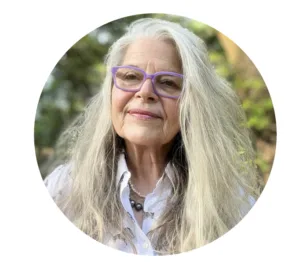
I’ve navigated my own midlife tsunami — that overwhelming season when everything you thought defined you starts to wash away, and the world seems to look right past you. But I’ve learned that midlife doesn’t have to mean invisibility, fighting to stay relevant, or feeling marginalized. I created a new way through this powerful chapter with a sacred self-identity paradigm called Spiritual Personality Typing℠ — a framework I developed to make sense of my own tsunami that has brought me more joy, soulful self-discovery, and intentional living. Now, I help women design lives that are entirely their own — untethered from society’s expectations and rich with new beginnings, confidence, and freedom.
Photo Credit: Jonathan Cosens Photographer